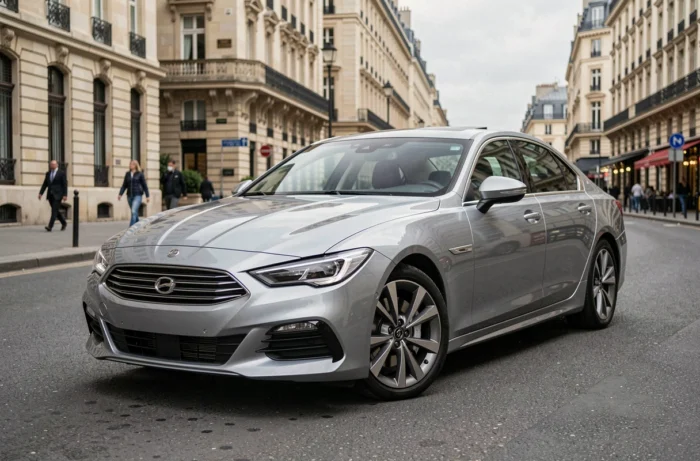
The French automotive market is undergoing a rapid transformation. In the summer months of 2026, the share of electric cars surpassed 35 to 38% of new registrations, driven by social leasing and rising fuel prices. For a private buyer, the landscape of available models looks nothing like it did two years ago.
Depreciation of used electric cars: what prices reveal
Have you noticed that a three or four-year-old electric car sometimes sells for half its new price? This phenomenon has a name: accelerated depreciation. It affects certain electric models much more severely than their thermal counterparts.
The main reason lies in battery technology. A model released in 2022 with modest range finds itself competing with new vehicles offering more kilometers for a comparable, or even lower price thanks to public subsidies. The old generation loses value as the new one progresses.
For a savvy buyer, this is a window of opportunity. Sales of used electric cars are showing increases of around 30 to 50% depending on the months in 2026, and now represent 5 to 6% of transactions in the used market. To browse all cars on Équipotto, comparing prices between new and used often helps identify these depreciation gaps before they narrow.
The trap to avoid: buying a model whose battery is not guaranteed or whose manufacturer has ceased software support. Always check the battery health certificate (called State of Health) before signing.

SUV, city car, or electric sedan: what type of vehicle to choose in 2026
The classic reflex is to choose an SUV for its trunk volume and high driving position. In electric, this choice has a concrete cost: an SUV consumes more energy than a city car, which reduces the real range compared to what is displayed on the technical sheet.
Let’s take a simple example. A compact electric city car, like the Renault 5 E-Tech, is aimed at urban and suburban use with a battery sized for that perimeter. A mid-sized electric SUV carries a heavier battery to compensate for its mass, which increases the purchase price without always improving daily range.
The right criterion is not the size of the vehicle, but the typical journey you make each week. If your trips rarely exceed 40 km per day, a city car easily meets the need, with a significantly lower purchase and maintenance budget.
For those who regularly undertake long journeys, the electric sedan often offers the best compromise between range and consumption. Recent models achieve comfortable ranges without the excess weight of an SUV.
Concrete criteria to guide your choice
- Average daily distance: below 50 km, a city car is sufficient and the return on investment is quicker
- Access to a home charging station: without a wallbox, prioritize a model compatible with fast charging for public stations
- Total budget over five years: include the cost of insurance, energy, and maintenance, not just the catalog price
- Estimated resale value: models from well-established brands in France (Renault, Peugeot) retain their value better than some recently arrived manufacturers
Threshold of 108 g of CO2 and weight penalty: what changes for buyers
Since 2026, regulatory constraints have tightened. Specifically, this means that new thermal cars are more expensive to produce. Manufacturers are passing these extra costs onto catalog prices, making the gap with electric vehicles less pronounced than before, especially in the entry-level segment.
A threshold of 108 g of CO2 per kilometer and a maximum weight of 1,500 kg are among the benchmarks that determine penalties. For a buyer of a thermal or hybrid vehicle, checking these two values on the technical sheet avoids unpleasant surprises at the time of registration.
Plug-in hybrid: beware of the penalty trap
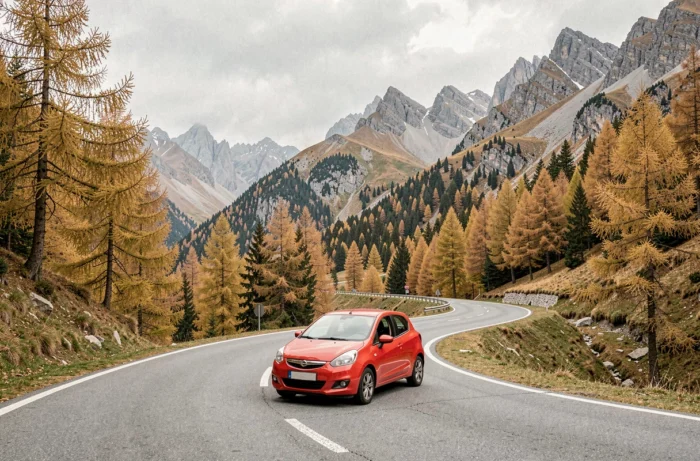
Plug-in hybrid vehicles show very low emissions in mixed cycle, but their weight often exceeds the 1,500 kg threshold. The weight penalty can negate the tax advantage of the hybrid. Before opting for this type of engine, calculate the actual penalty by combining emissions and vehicle weight.
Used market in 2026: overall decline, but not everywhere
The French used car market is declining by about 4 to 5% in the early months of 2026. Vehicles over ten years old account for around half of transactions, a sign of an aging fleet.
This overall decline masks a contrasting reality. Used electric cars are progressing strongly, while older diesels struggle to find buyers in low-emission zones (LEZ). The used electric segment is the only one showing clear growth in this market.
For a buyer, two strategies emerge:
- Take advantage of the price drop on recent thermal vehicles (gasoline, mild hybrid) that remain reliable and less exposed to short-term LEZ restrictions
- Target a used electric car two to three years old with good residual battery capacity, negotiating the depreciation
- Avoid Euro 5 diesels and older, whose resale will become increasingly difficult as LEZs expand
The 2026 Paris Motor Show, scheduled for October, is expected to showcase around sixty Chinese models alongside European manufacturers. This increased competition will weigh on new prices in the following months, which could also pull used prices down.
One last point to keep in mind: the manufacturer’s warranty on the battery remains the best safety net when purchasing an electric vehicle, whether new or used. Without it, the cost of replacement can exceed the vehicle’s residual value.